
AG1 is already famous.
That changes the assignment.
A brand with low awareness needs attention. A brand with massive awareness needs interpretation. Once enough people have heard the pitch, the next question is not whether they know the product exists. It is what story they use to explain it.
AG1 has the kind of awareness many wellness brands would buy twice if they could. It is familiar from podcasts, creator reads, health media, and the repeated visual ritual of a green scoop in a glass.
That kind of familiarity is powerful. It also creates a second-order problem.
When a product becomes famous through repeated borrowed trust, skepticism starts traveling with the awareness.
So the strategic question is not, "How can AG1 sound louder?"
It is simpler and harder:
How can AG1 make trust easier to inspect?
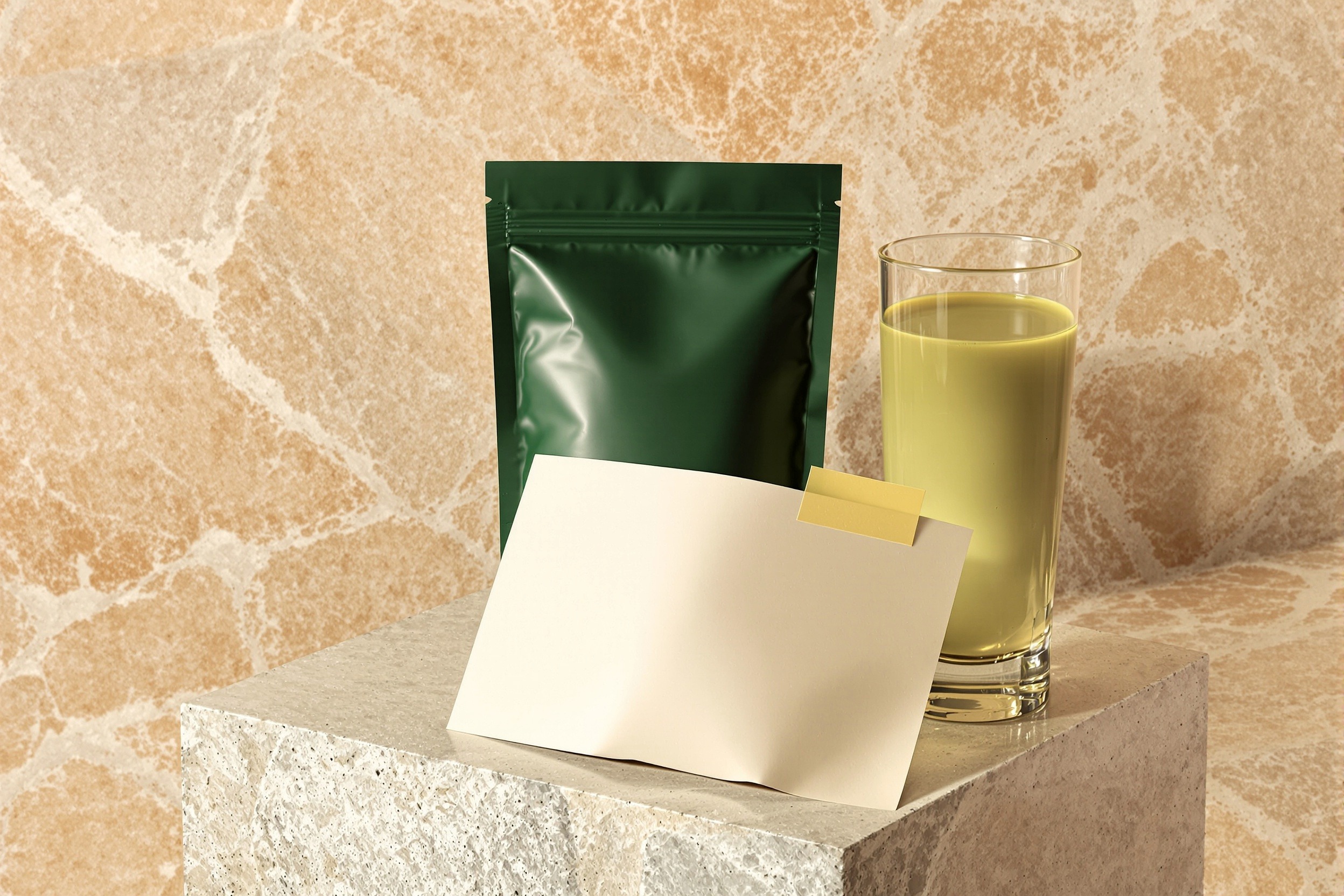
The feature image above is generated concept imagery for Mega City's speculative AG1 direction. It is not AG1 photography and not a finished homepage mockup. It shows the quieter tone we would use to support the idea of AG1 as a daily baseline: product weight, restraint, and less wellness spectacle.
The point of this concept
This is unsolicited concept work. AG1 did not ask Mega City for it. Mega City is not affiliated with AG1.
The point is not to pretend we have designed AG1's next website.
The point is to show a strategic shift.
AG1 already has public proof assets. AG1 publicly describes its product as a clinically backed Daily Health Drink. It says the formula includes 75+ ingredients, points to clinical research, describes NSF Certified for Sport status, says it third-party tests, and publishes quality documentation.
That is not an empty shelf.
The issue is presentation.
If the public impression is dominated by creator exposure, the proof can feel like supporting material rather than the center of the story. Marketing Brew reported Athletic Greens worked with hundreds of podcasters. McGill Office for Science and Society later critiqued AG1 as a premium "just in case" product for the worried well, while still acknowledging NSF certification as a meaningful quality signal.
That tension is the opportunity.
Not to attack AG1. Not to claim the product does or does not work. This is brand strategy, not nutrition advice.
The opportunity is to move the brand from hype recognition to inspectable trust.
The proposed shift: The Daily Baseline
The concept platform is:
The Daily Baseline
That phrase is deliberately quiet.
It does not promise transformation. It does not create a fantasy of optimization. It does not ask the buyer to join a lifestyle tribe.
It says: this belongs in the daily routine, and it should be evaluated with the seriousness of a daily product.
The lead copy would move in the same direction:
Set your baseline.
And the sharper line underneath it:
No miracle. No stack. One tested daily foundation.
That line is not meant to make a medical claim. It is meant to lower the temperature.
The best version of this direction does not make AG1 feel less premium. It makes the premium feel more earned.

What we would change first
We would not start by making a louder campaign.
We would start by changing what the buyer is invited to inspect.
A skeptical premium buyer is not only asking, "Do I like this brand?"
They are asking:
- What is in it?
- What has been tested?
- What is being claimed?
- What is not being claimed?
- What is this replacing in my routine?
- What should I not expect it to do?
That is the real trust experience.
AG1's current public materials already contain a lot of the raw ingredients for that answer. The brand talks about research, testing, ingredient groups, quality standards, and reviews. The shift is to make those elements feel less like backup evidence and more like the architecture of the page.
In plain English: put the receipts closer to the promise.
What "proof architecture" means here
"Proof architecture" can sound abstract, so here is the simple version:
It is the way a brand organizes evidence so a buyer can decide whether to trust it.
For AG1, that might mean the page is built around four plain categories:
-
What AG1 says is in the product
Ingredient groups, not a wall of wellness language. -
What AG1 says has been tested
Quality, contaminants, banned substances, and label accuracy in language a buyer can understand. -
What AG1 says has been studied
Research context placed near the claim it supports. -
What AG1 is not claiming
Not a meal replacement. Not medical treatment. Not individualized nutrition advice. Not a substitute for the fundamentals.
The fourth category matters.
Limits are not a weakness. In a skeptical category, clear limits make the stronger claims more credible.

What the imagery is doing
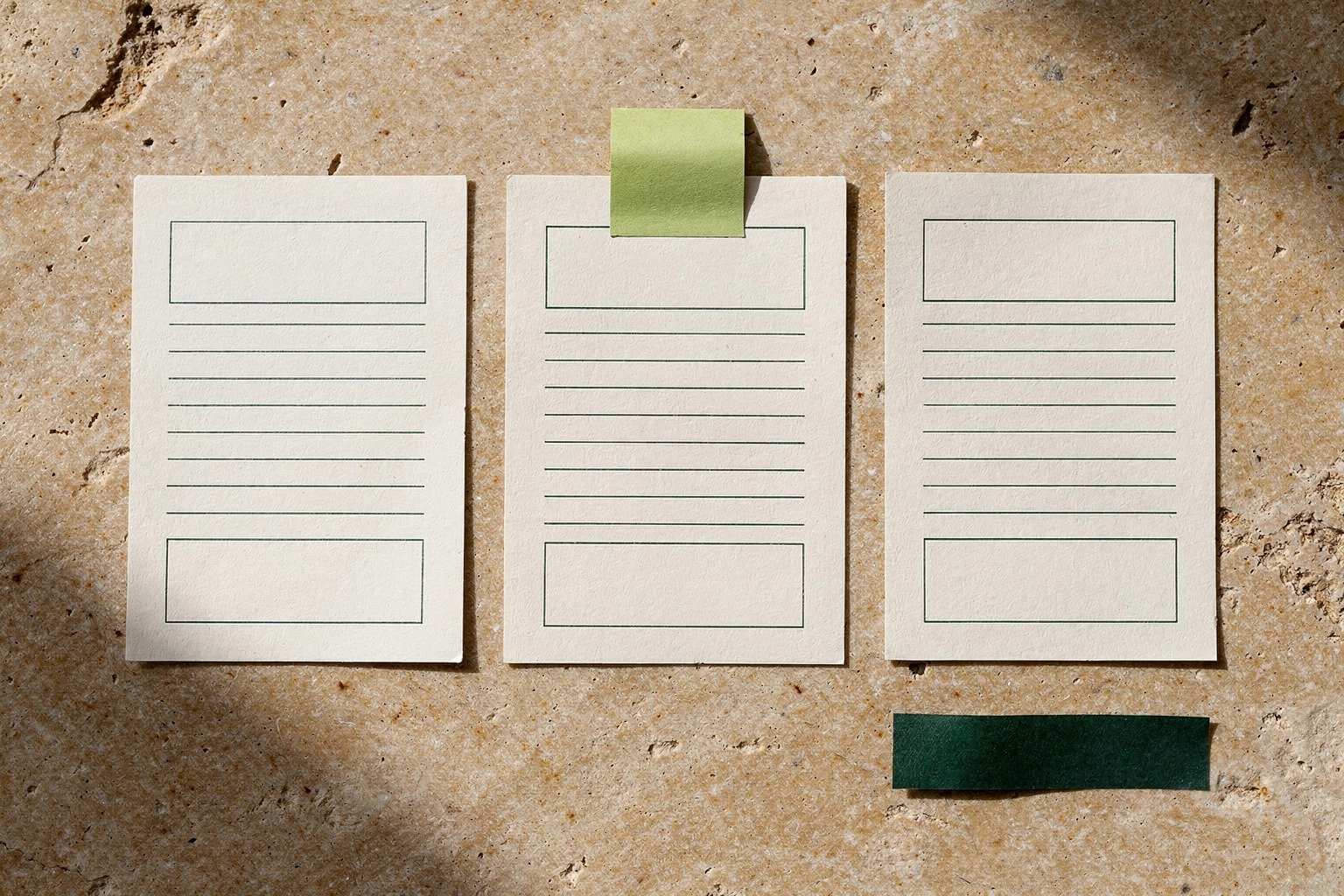
The imagery in this article is not a single master sheet.
It is not a claim that this exact hero, card system, or support set should be shipped as AG1's homepage.
It is showing the tone that would reinforce The Daily Baseline concept.
That tone has rules:
- no influencer faces
- no athletes
- no ingredient scatter
- no lab coat theater
- no fake certification marks
- no miracle glow
- no overdesigned wellness optimism
Instead, the visual system uses blank packaging, green liquid, warm stone, bone paper, and quiet documentation cues.
Those choices are not decoration. They make the brand feel more inspectable.
The product is not floating in aspiration. It is sitting on the table.

What this contrasts with
This concept is not saying AG1's current brand is bad.
It is saying the brand has entered a different phase.
The creator-era story helped make AG1 familiar. That is valuable. But the same repetition that builds awareness can also make skeptical buyers feel like they have heard the promise too many times.
So the contrast is not "current AG1 versus prettier AG1."
The contrast is:
Borrowed trust versus inspectable trust.
Borrowed trust says: people you recognize keep telling you this matters.
Inspectable trust says: here is what the product is, here is what AG1 says is tested, here is what the research context is, here are the limits, and here is the daily role it is meant to play.
That is a more mature posture for a high-awareness brand.
Why this matters beyond AG1
AG1 is only the example.
The lesson applies to any brand that grows through attention and then has to live with the side effects of that attention.
A story that works at one stage can become friction at the next stage.
Early on, repetition creates memory.
Later, repetition can create resistance.
That is when brand work has to change shape. It becomes less about making people hear the promise and more about helping them inspect the promise.
That is the space Mega City is interested in.
Not surface polish. Not cheap teardown energy. Not a fake campaign pretending to be finished work.
A clear strategic gap, translated into copy, tone, and visual direction.
The takeaway
For AG1, the post-hype move is not louder wellness marketing.
It is a calmer trust system.
Make the proof easier to find. Put limits in the open. Treat the buyer as skeptical and intelligent. Let the visual world become quieter so the evidence has more room to work.
That is what The Daily Baseline is trying to express.
Not a finished AG1 website.
A direction: less hype, more inspection.
Disclosure: This is unsolicited concept work by Mega City. Mega City is not affiliated with AG1. All imagery in this article is generated concept imagery created for strategic demonstration. It is not AG1 photography, not commissioned by AG1, and not a real campaign.
Sources checked: AG1 public product, research, ingredient, and quality pages; Marketing Brew reporting on Athletic Greens' podcast strategy; McGill Office for Science and Society's critique of AG1; Reuters coverage of AG1's reported strategic-options process. This article is brand strategy commentary, not medical or nutrition advice.